Driver monitoring from a smartphone, not a camera
Every trip gets six driving behaviour scores, measured from the GPS receiver and motion sensors already in the phone. No in-cab camera, no wiring, and no per-vehicle hardware cost.
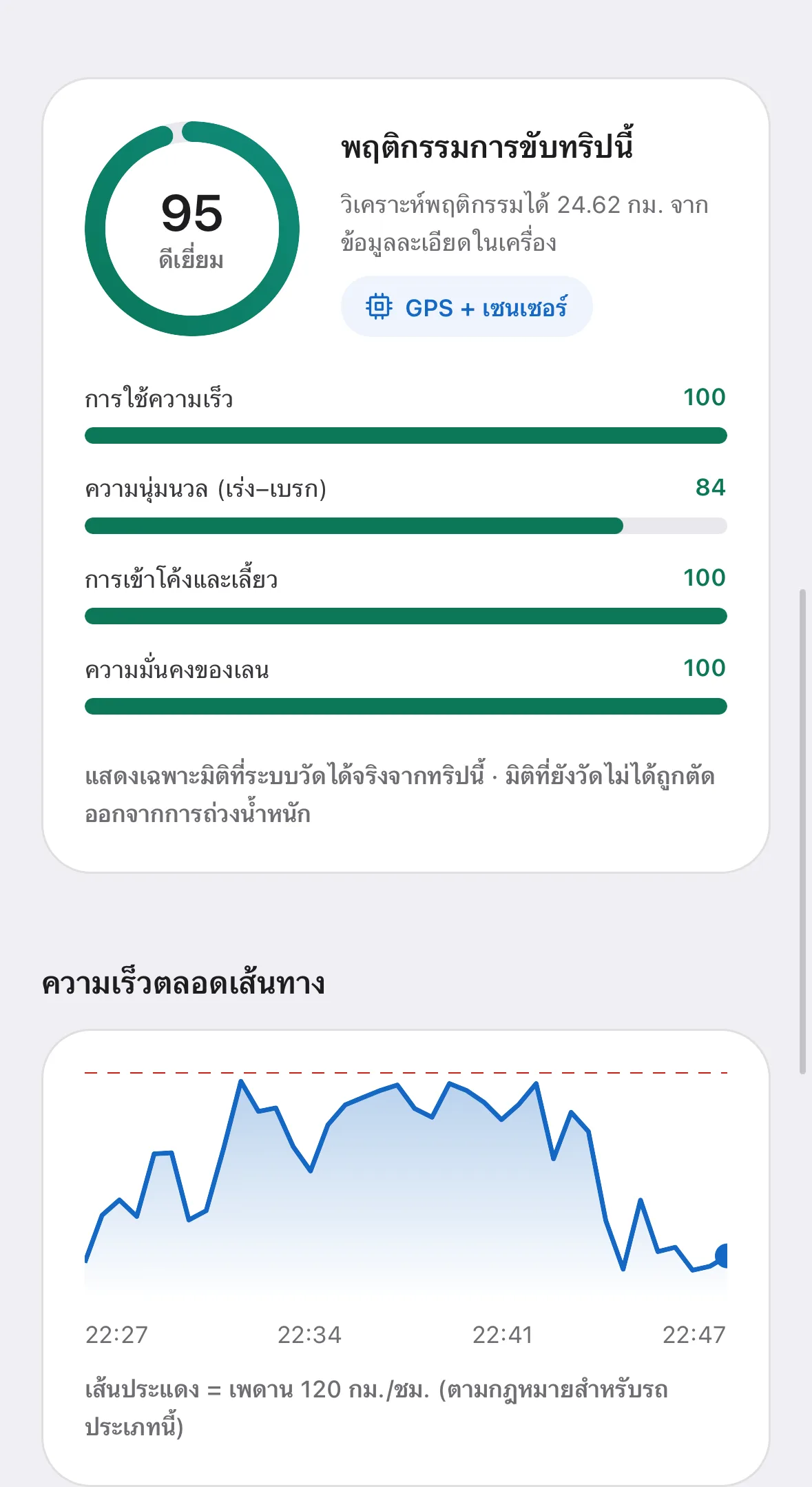
- No camera or in-vehicle box
- Alerts only at genuinely dangerous moments
- Evidence for investigations and insurance claims
What a driver monitoring system (DMS) does
A driver monitoring system records and classifies how a driver actually drives, so risk can be attributed to a person, a moment and a route rather than guessed at. Traditional DMS uses an in-cab camera or a box wired into the vehicle. MOBIX reads the GPS receiver and motion sensors in the phone running the app during a shift, producing six behaviour scores per trip with nothing fitted to the vehicle.
- The six measures
- Speed, smoothness of acceleration and braking, cornering and turning, lane stability, attention, and fatigue.
- How it differs from camera DMS
- A camera can watch eyes and faces, but needs fitting per vehicle and raises serious privacy objections. This reads vehicle motion instead, so it starts on day one across every vehicle — rentals and staff-owned cars included.
- When the driver is warned
- Immediately, and only at moments of real danger, so behaviour can change mid-shift rather than being nagged until the warnings stop registering.
- What the scores are for
- Identifying who should attend safety training first, supporting accident investigations and insurance claims, and setting an organisation-wide safety statistic for ESG reporting.
The losses that build up from driving nobody watches
A single accident rarely ends at the repair bill: damaged goods, a vehicle earning nothing while it sits, penalties for late delivery, and credibility you do not get back.
Cameras never get fitted to everything
Camera DMS needs an installer, a vehicle off the road and wiring per unit — so rentals and staff-owned cars end up outside the system entirely.
You find out after the event
Without a score per trip, an organisation learns who drives dangerously when the insurance claim arrives — far too late to prevent it.
Investigations come down to opinion
With no speed data and no record of where the risk events happened, an accident investigation rests on each side’s account of it.
From phone sensors to a score per trip
Nothing extra for the driver to do. The score falls out of starting and finishing work as normal.
- 01
Start work before setting off
The system begins reading GPS position alongside the device’s motion sensors, and shows the driver that recording is running.
- 02
Risk events classified as they happen
Harsh acceleration, heavy braking, aggressive cornering and lane weaving are recorded and classified automatically, with the location of each.
- 03
Warned only when it matters
The driver is alerted at the moment of genuine danger so behaviour can change during the shift — not summarised afterwards.
- 04
Finish work and the score is there
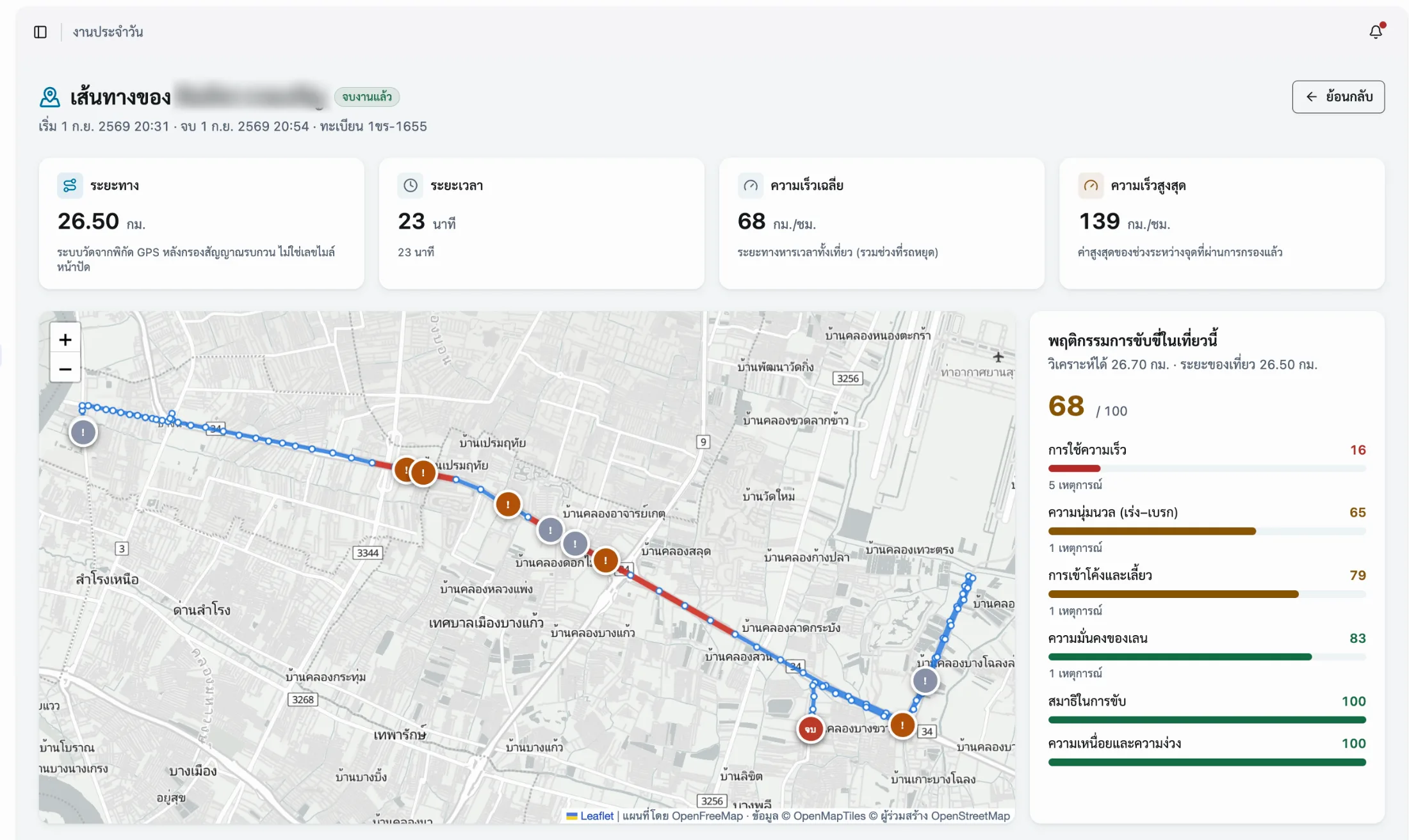
The system summarises the overall and per-measure scores for that trip, with the route, average and top speed, and where the risk events occurred.
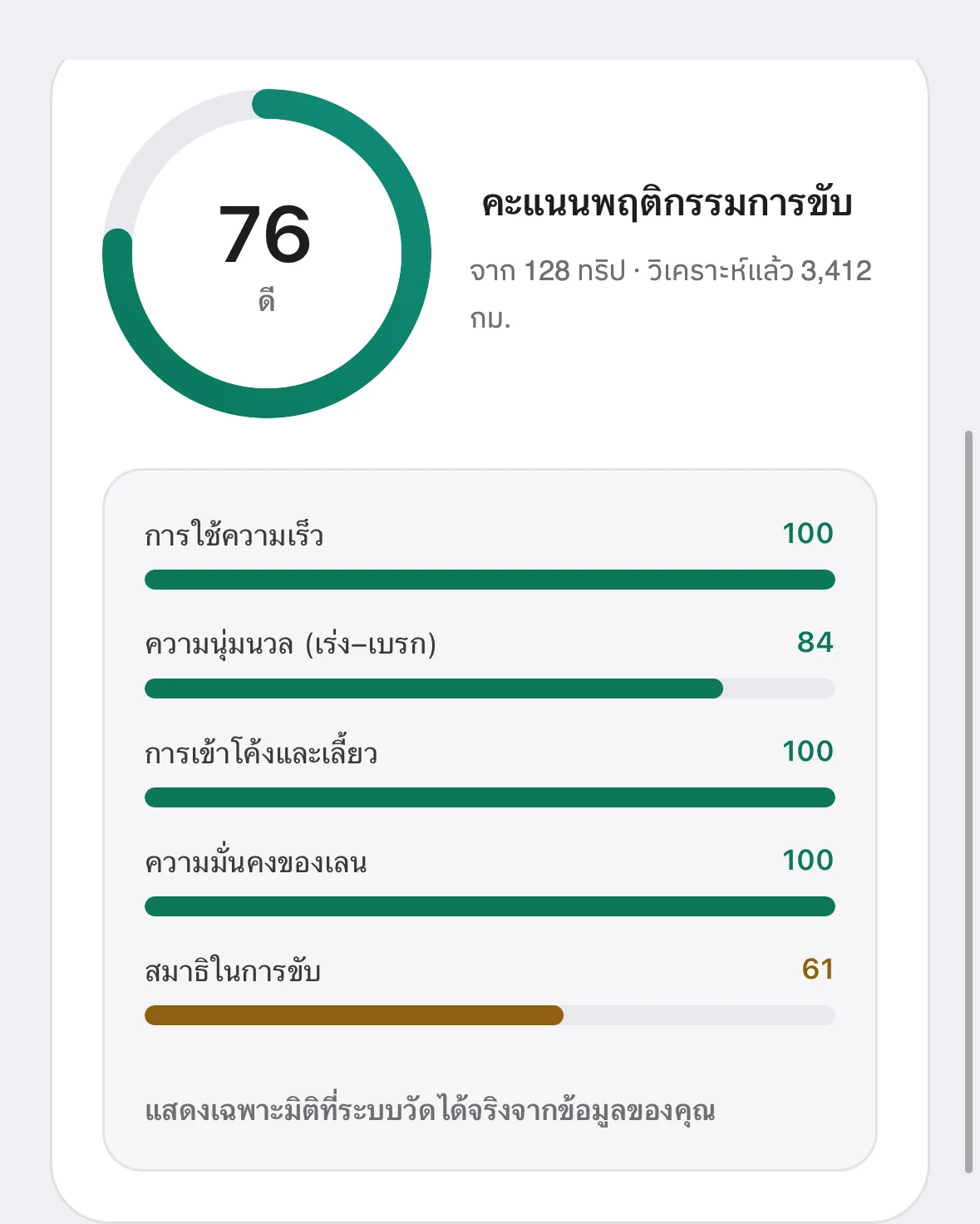
What a safety manager can see
Every figure comes from real trips, not from a questionnaire or self-reporting.
- Six behaviour scores per trip, and an overall score per driver
- Risk events plotted on a map, showing which routes repeat the danger
- Average and top speed for every trip
- Risk events per 100 km, so months with different mileage compare fairly
- An organisation-wide average for targets and ESG social reporting
- Operators can see their own scores — transparency running both ways
One trip: route, speed and every risk event
Frequently asked questions
The questions our team hears most about Driver Monitoring — from operations, HR and IT.
01What is a DMS, and how is it different from a GPS box?
A DMS — driver monitoring system — measures how someone drives, not just where the vehicle is. A GPS box answers where it went and by what route. A DMS answers how it was driven: where the harsh acceleration, heavy braking or aggressive cornering happened. MOBIX provides both from one phone, reading position from GPS and motion from the device’s sensors.
02Is phone-based behaviour measurement accurate enough to use?
Accurate enough for screening and comparison. Scores are expressed as risk events per 100 km, so drivers and months with very different mileage compare fairly. The limitation to know: smartphone sensors vary in precision between models, so a score should not be treated as a definitive judgement of an individual — it tells you who or which route to look at first.
03Can we dock pay or KPIs directly on the behaviour score?
We advise against it. Sensor precision differs by device model, so deducting pay on the score alone invites unfairness and disputes. What works in practice: use it to decide who attends safety training first, to support accident investigations and insurance claims, and as supporting evidence for overtime claims — which protects operators as much as the company.
04Do we need to fit an in-cab camera?
No. The system uses no camera and records no image or audio from the cab, which removes the privacy objection that stops most camera-based DMS projects being accepted by drivers. What it reads is vehicle motion, via GPS and the phone’s sensors, and only while the operator has started work.
05How do behaviour scores feed an ESG report?
They work as a social indicator: report the average behaviour score across all operators and the rate of risk events per 100 km, which is a basis comparable across periods, plus the proportion of shifts that began with a fitness-to-work check as evidence of duty of care. All of it traces back to real trips, so it stands up to audit.
Related solutions
- GPS TrackingTrack location, route, timing and real distance live, from the app on a phone.
- Delivery TrackingSee where delivery vehicles are, the status of every job, and the time and coordinates of each drop.
- Fleet ManagementRun company vehicles end to end — documents, servicing, per-vehicle cost and incidents in one system.
See how your vehicles are driven, before it becomes a claim
Book a live walkthrough. We will show you the per-trip scores, where the risk events happened, and the organisation-wide safety report.